GraduateSmart
GraduateSmart
Design, develop, build, and test mechanical devices including tools, engines, and machines.
$68,740
Lower reported wage
$102,320
Median
$161,240
Upper reported wage
Annual U.S. salaries. Actual pay varies by location, employer, and experience. The lower and upper figures do not represent starting and senior salaries.

Build a personalized Roadmap Plan with CLEP savings and school matches.
Create free account →A PE license is not required for entry-level mechanical-engineering jobs. It can be needed later to approve plans or offer services to the public; state rules apply. [1]
Search CareerOneStop by occupation and state, then confirm the rules with the issuing agency. Coverage is incomplete; an empty result does not mean no license is required.
About license data coverageExam is FREE with Modern States
Sign up free at modernstates.org, complete the course, and receive a voucher that covers the full $97 exam fee.
modernstates.orgCLEP Calculus
4 credits · Mathematics
$2,303
saved
CLEP College Algebra
3 credits · Mathematics
$1,703
saved
CLEP College Mathematics
3 credits · Mathematics
$1,703
saved
CLEP Precalculus
3 credits · Mathematics
$1,703
saved
U.S. career guide. Program, employer, and state requirements can differ.
Direct match. Median $102,320; 11.2% growth — much faster than average. ~298,500 jobs.
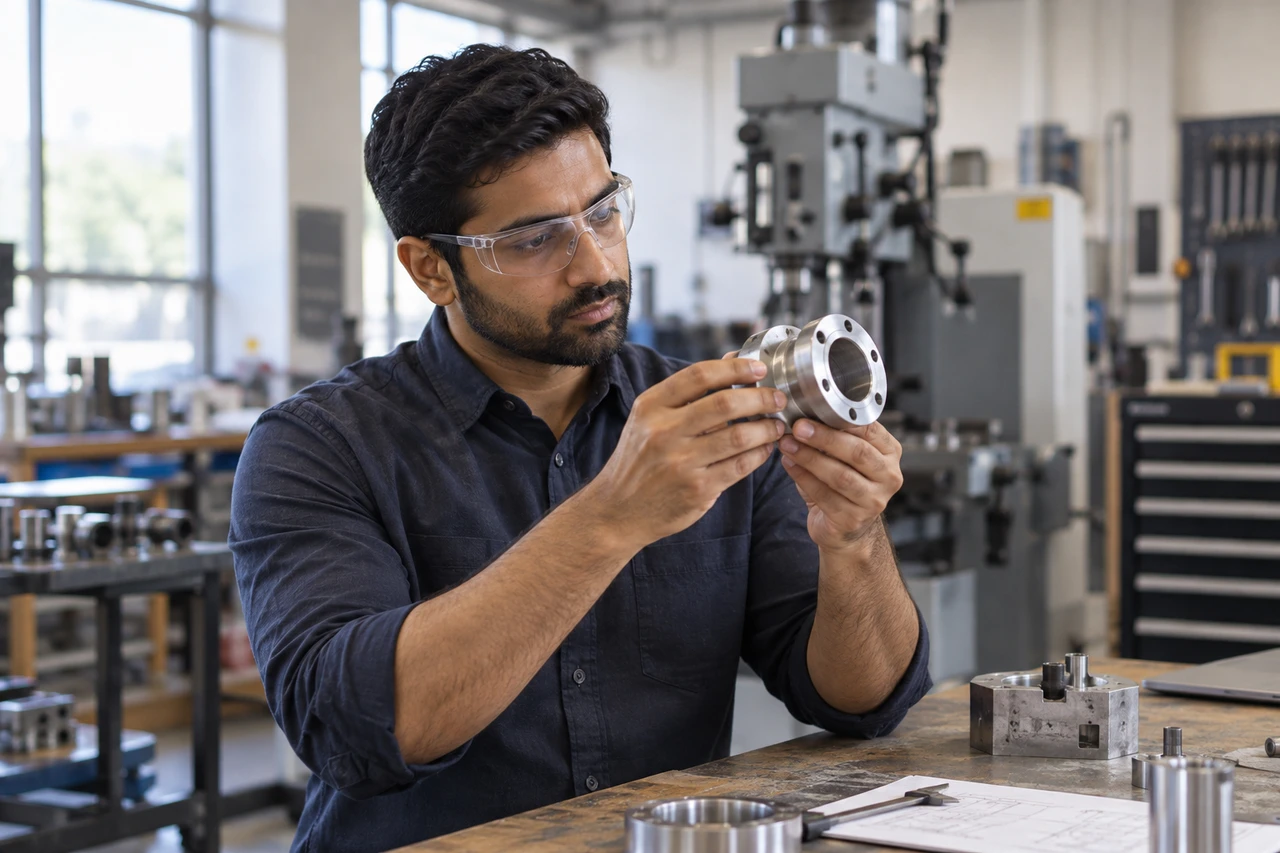
Illustration: AI-generated image · Illustrative scene
Internships and co-ops may provide practical experience and income. Ask each employer about pay and supervision. [1]
Compare tuition after aid, lab or software needs, paid internship access, and any later FE/PE exam costs.
Planning questions: request a written estimate from each program or sponsor. A total cost has not been verified here.
A related major can be preparation; it does not by itself qualify you for the career.
A typical preparation route; compare accreditation, design labs, and internship or co-op access. [1]
Analyze mechanical problems, design and test devices or systems, investigate failures, and improve equipment with a team. [1]
Most work in offices and visit manufacturing or other worksites when equipment or prototypes need direct attention. [1]
Most work full time, and some work more than 40 hours a week. [1]
Design and troubleshooting require careful math, repeated testing, teamwork, and attention to safety around machinery. [1]
Experience can lead to project leadership, management, or specialist work; some research and university roles require graduate study. [1]
These are possible directions. Promotion timing and pay depend on the role and employer.