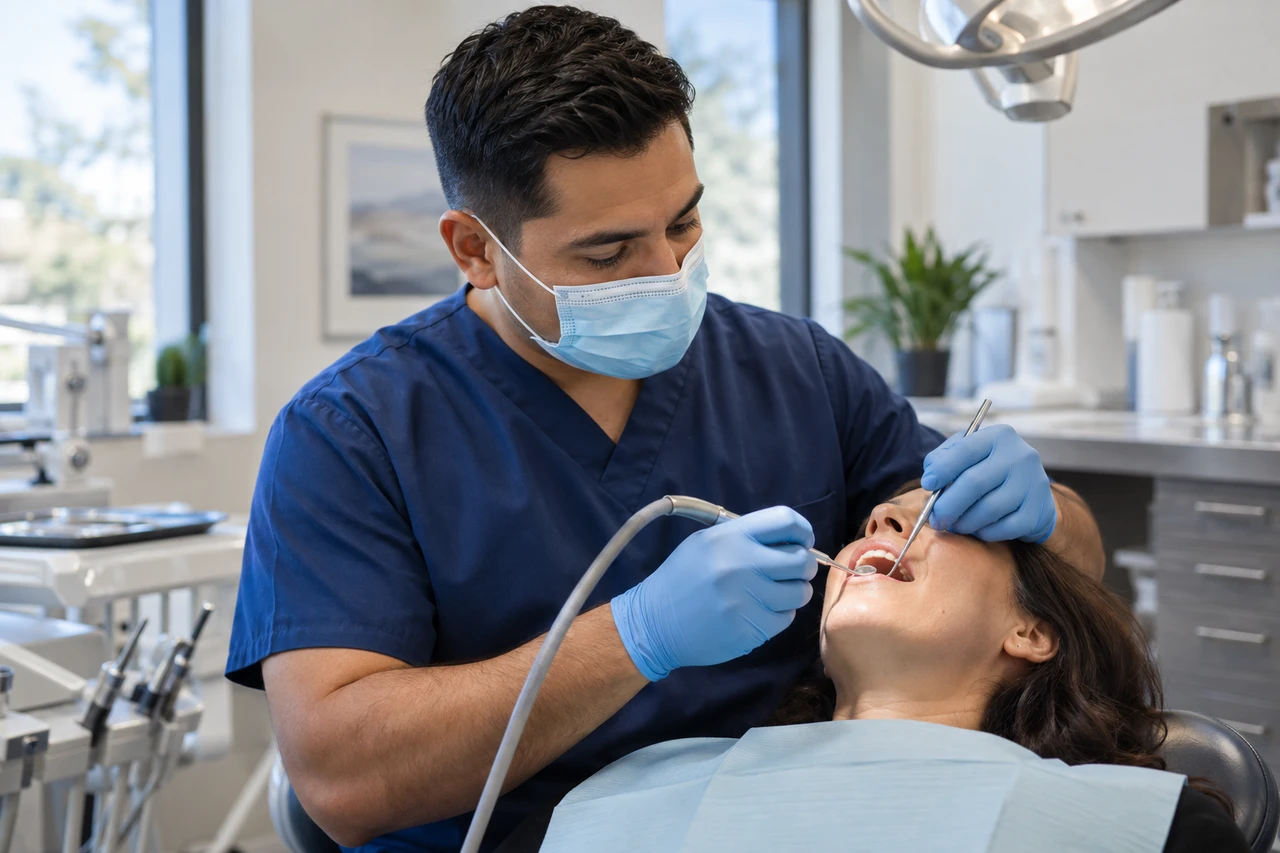
Clean teeth, examine patients for signs of oral diseases, and provide preventive dental care.
Pay
$66,470
Lower reported wage
$94,260
Median
$120,060
Upper reported wage
Annual U.S. salaries. Actual pay varies by location, employer, and experience. The lower and upper figures do not represent starting and senior salaries.
AI-generated image · Illustrative scene
Make this your goal
Build a personalized Roadmap Plan with CLEP savings and school matches.
Compare dental hygiene programs and their prerequisites; high school biology, chemistry, and math help prepare you. College-level prerequisites vary by school.
Complete an accredited dental hygiene program. An associate’s degree is typical; programs usually take 3 years and include classroom, laboratory, and clinical work.
Apply for the license required by the state where you will work. Most states require written and clinical examinations; check your state board’s exact rules.
Every state requires licensure, usually after an accredited program and written and clinical exams. Continuing education is required to maintain a license; many jobs also require CPR certification.[1]
Search CareerOneStop by occupation and state, then confirm the rules with the issuing agency. Coverage is incomplete; an empty result does not mean no license is required.
U.S. career guide. Program, employer, and state requirements can differ.
About this data
Direct match. Median $94,260; 8% growth. 225,300 jobs.
SOC 29-1292BLS EP 2025-35Verified 2026-04-28View on BLS
Illustration: AI-generated image · Illustrative scene
Training pay & costs
Can I earn while training?
Dental hygiene programs include clinical instruction. The BLS profile does not say whether a specific program pays students for clinical hours; ask the school.[1]
Costs to check before enrolling
Ask about prerequisite courses, full program tuition after aid, instruments and protective supplies, clinical travel, written and clinical exam fees, and state license renewal.
Planning questions: request a written estimate from each program or sponsor. A total cost has not been verified here.
Majors and routes to explore
A related major can be preparation; it does not by itself qualify you for the career.
The direct degree pathway; verify accreditation and state exam eligibility before enrolling.[1]
Daily life
What you would do
Remove tartar and plaque, screen for oral disease, take dental x-rays where allowed, document care, and teach patients how to protect their teeth and gums.[1]
Where you could work
Most work in dentists’ offices, alongside dentists and other staff. The procedures and supervision permitted depend on state rules.[1]
Hours and flexibility
Part-time work is common. Some hygienists work only a few days a week for one office or divide time among offices.[1]
Physical and emotional demands
Care requires precise hand movements in a small space and close patient contact. Protective equipment and x-ray safety procedures help reduce exposure.[1]
How you could advance
A bachelor’s or master’s degree can support research, teaching, or public or school health roles. Requirements depend on the position; these are not automatic promotions.[1]
These are possible directions. Promotion timing and pay depend on the role and employer.
Questions to ask yourself and an employer
Would I enjoy close, detail-focused patient care and teaching prevention?
Do the available full-time or part-time schedules fit my income and benefits needs?