GraduateSmart
GraduateSmart
Compare trade training routes
Compare trade-school and apprenticeship routes. Check each program’s training length, pay, tuition, fees, and local licensing requirements.
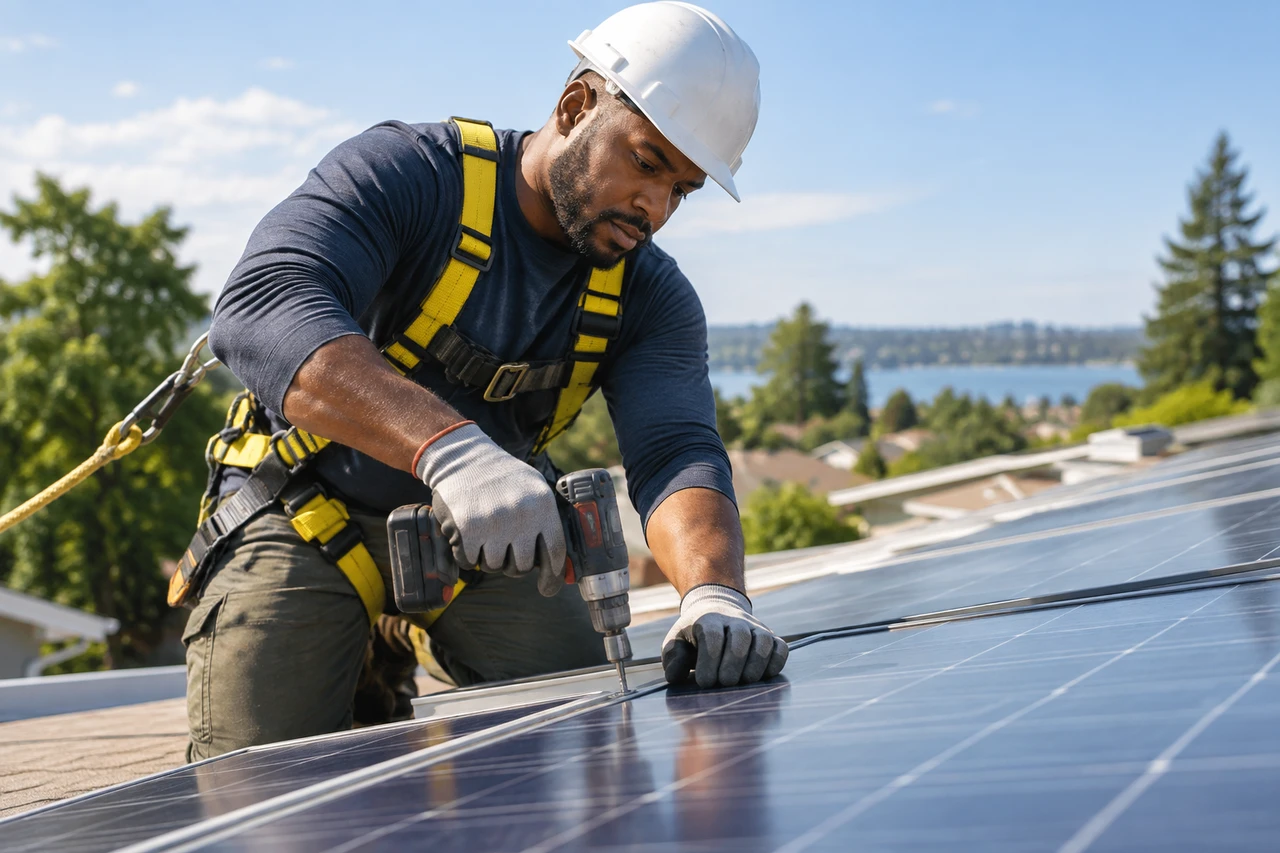
Solar Panel Installers assemble, install, and maintain solar energy systems on rooftops and ground-mounted arrays. The fastest-growing occupation in the US with entry-level positions available after short-term training.
$39,070
Lower reported wage
$51,860
Median
$80,150
Upper reported wage
Annual U.S. salaries. Actual pay varies by location, employer, and experience. The lower and upper figures do not represent starting and senior salaries.

Get matched with trade schools, apprenticeships, and certifications.
Create free account →Requirements vary by state and locality; installation does not automatically authorize licensed electrical work. [1]
Search CareerOneStop by occupation and state, then confirm the rules with the issuing agency. Coverage is incomplete; an empty result does not mean no license is required.
About license data coverageU.S. career guide. Program, employer, and state requirements can differ.
BLS 'Solar Photovoltaic Installers' (47-2231). Median $51,860; 36.5% growth — among the fastest-growing occupations in the US, 2025-35.
Illustration: AI-generated image · Illustrative scene
Ask whether any internship, field placement, or supervised training in your chosen route is paid; arrangements vary. [1]
Compare tuition after aid, required supplies and exams, travel, and any unpaid training time for the route you choose.
Planning questions: request a written estimate from each program or sponsor. A total cost has not been verified here.
A related major can be preparation; it does not by itself qualify you for the career.
A related technical route; compare supervised job placement and local licensing pathways. [1]
Assemble, install, and maintain solar photovoltaic panels and supports. [1]
Installers work outdoors at homes and commercial sites, often on roofs. [1]
Usually full time; weather and project deadlines affect hours. [1]
Heights, lifting, heat, and electrical hazards demand careful protective practices. [1]
Experience may lead to crew leadership, system design support, or contracting with proper credentials. [1]
These are possible directions. Promotion timing and pay depend on the role and employer.