Compare trade-school and apprenticeship routes. Check each program’s training length, pay, tuition, fees, and local licensing requirements.
About this Career
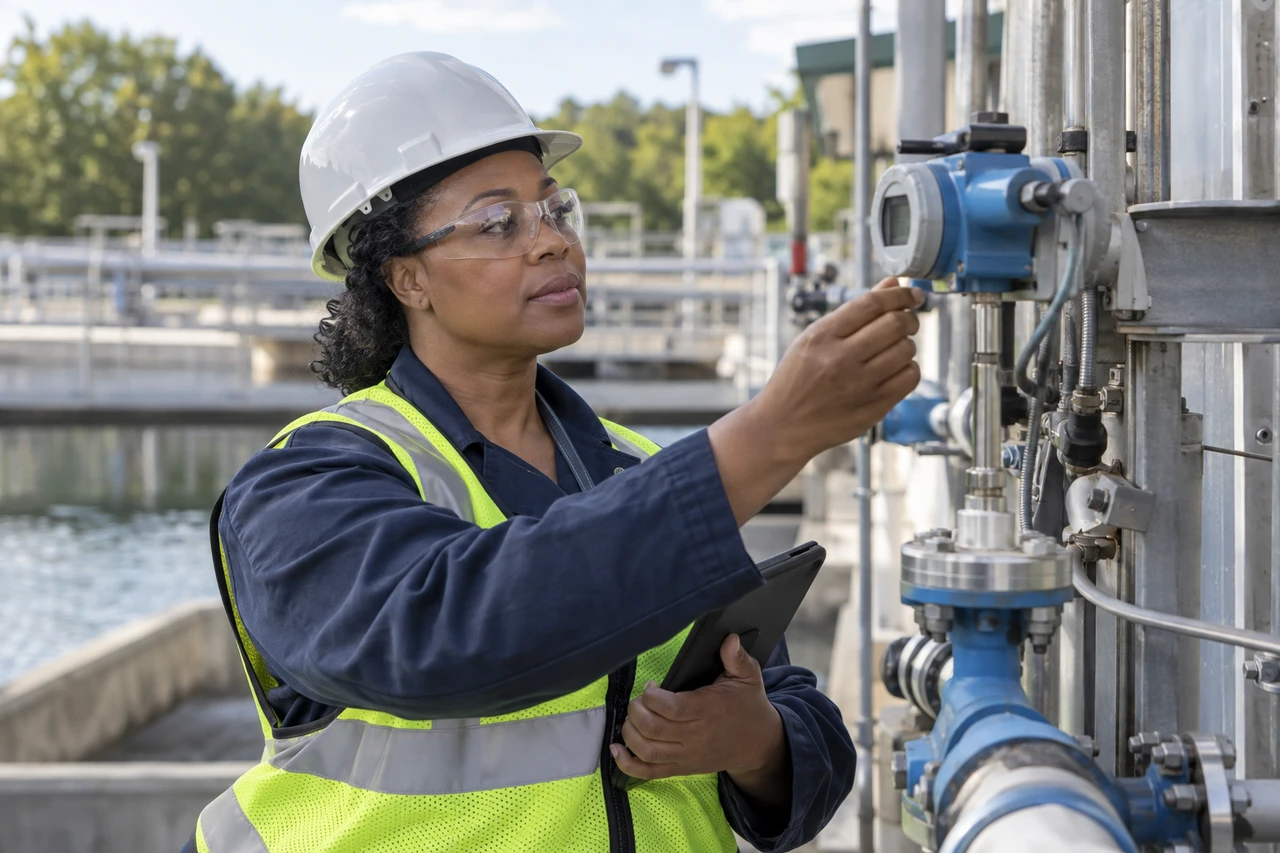
Run the treatment plants and systems that make drinking water safe to use and clean wastewater before it is released. Operators work from control boards to manage pumps and treatment equipment, collect and test water and sewage samples, add chemicals such as chlorine to disinfect water, record meter and gauge readings, and inspect equipment to catch problems early.
Pay
$39,110
Lower reported wage
$60,020
Median
$91,060
Upper reported wage
Annual U.S. salaries. Actual pay varies by location, employer, and experience. The lower and upper figures do not represent starting and senior salaries.
AI-generated image · Illustrative scene
Make this your goal
Get matched with trade schools, apprenticeships, and certifications.
Search CareerOneStop by occupation and state, then confirm the rules with the issuing agency. Coverage is incomplete; an empty result does not mean no license is required.
U.S. career guide. Program, employer, and state requirements can differ.
About this data
BLS 'Water and Wastewater Treatment Plant and System Operators' (51-8031). Pay is the national OEWS estimate for May 2025: a median of $60,020, with the 10th to 90th percentile running from $39,110 to $91,060. About 132,400 people held these jobs in 2024. O*NET lists the 2024-34 outlook as a decline of 1% or more; openings still arise as current operators retire or leave the occupation.
SOC 51-8031BLS OEWS May 2025; EP 2024-34 via O*NETVerified 2026-09-18View on BLS
Illustration: AI-generated image · Illustrative scene