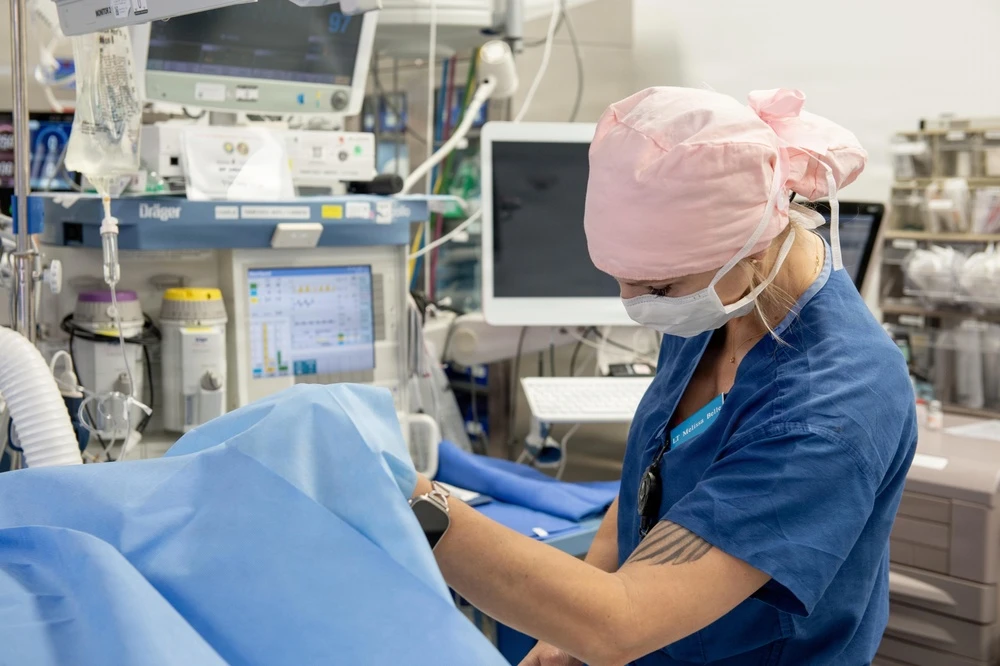
Administer anesthesia and provide care before, during, and after surgical procedures.
Pay
$155,250
Lower reported wage
$236,590
Median
$339,500
Upper reported wage
Annual U.S. salaries. Actual pay varies by location, employer, and experience. The lower and upper figures do not represent starting and senior salaries.
Earn a bachelor’s or graduate degree in nursing or another appropriate major and hold an unencumbered RN or APRN license.
Gain at least 1 year of full-time critical-care RN experience, or its part-time equivalent. Individual programs may require more.
Complete a doctoral nurse-anesthesia program. AANA reports program lengths of 36–51 months and doctoral entry for all programs as of March 2026. This follows the earlier education and experience stages.
After graduation, pass the National Certification Examination and meet the requirements where you plan to practice.
The entry path includes RN/APRN licensure, critical-care RN experience, doctoral nurse-anesthesia education, and the National Certification Examination. Verify ongoing certification with NBCRNA and practice requirements with the state nursing board.[1]
Search CareerOneStop by occupation and state, then confirm the rules with the issuing agency. Coverage is incomplete; an empty result does not mean no license is required.
U.S. career guide. Program, employer, and state requirements can differ.
About this data
Nurse Anesthetists (29-1151): BLS OEWS, May 2025 annual U.S. wages: 10th percentile $155,250; median (50th percentile) $236,590; 90th percentile $339,500. These percentiles describe the wage distribution, not starting or senior pay. Wage figures reviewed September 13, 2026. Source: https://data.bls.gov/oesprofile/?areas=INDUSTRY,STATE,MSA&major_group=290000&measure=01&occupation=291151 . Employment and growth retain the individual occupation in BLS EP 2025-35; those figures were not refreshed in this wage review.
SOC 29-1151BLS EP 2025-35; OEWS May 2025Verified 2026-04-28View on BLS
Required critical-care RN experience comes before nurse-anesthesia training. It is a separate stage from the doctoral program; AANA’s entry requirements do not establish that doctoral clinical training is paid.[1]
Costs to check before enrolling
Request the full doctoral program cost, clinical travel and relocation costs, certification fees, and rules about outside employment. Plan separately for earlier nursing education and critical-care work.
Planning questions: request a written estimate from each program or sponsor. A total cost has not been verified here.
Majors and routes to explore
A related major can be preparation; it does not by itself qualify you for the career.
Nursing is an earlier preparation route; the nursing degree itself is not the CRNA qualification.[1]
Daily life
What you would do
Review patients before anesthesia, administer anesthesia, monitor vital signs, adjust care during procedures, and provide pain management.[2]
Where you could work
CRNAs practice in hospital operating and obstetric units, ambulatory surgical centers, and office-based settings.[1]
Hours and flexibility
BLS describes the broader advanced-practice nursing group: office roles often follow business hours, while hospital roles can include nights, weekends, holidays, and call. Confirm the specific CRNA position’s schedule.[2]
Physical and emotional demands
The broader BLS advanced-practice nursing profile describes physical and emotional demands, infection exposure, and responsibility for patient health. Ask the anesthesia team about emergency coverage and support.[2]
How you could advance
BLS identifies administration, teaching, and research as possible directions for advanced-practice nurses. These are broader-group possibilities, not a guaranteed CRNA promotion ladder.[2]
These are possible directions. Promotion timing and pay depend on the role and employer.
Questions to ask yourself and an employer
Am I willing to qualify and work as an RN before entering doctoral anesthesia training?
How would emergency call and high-responsibility procedural care fit my life?