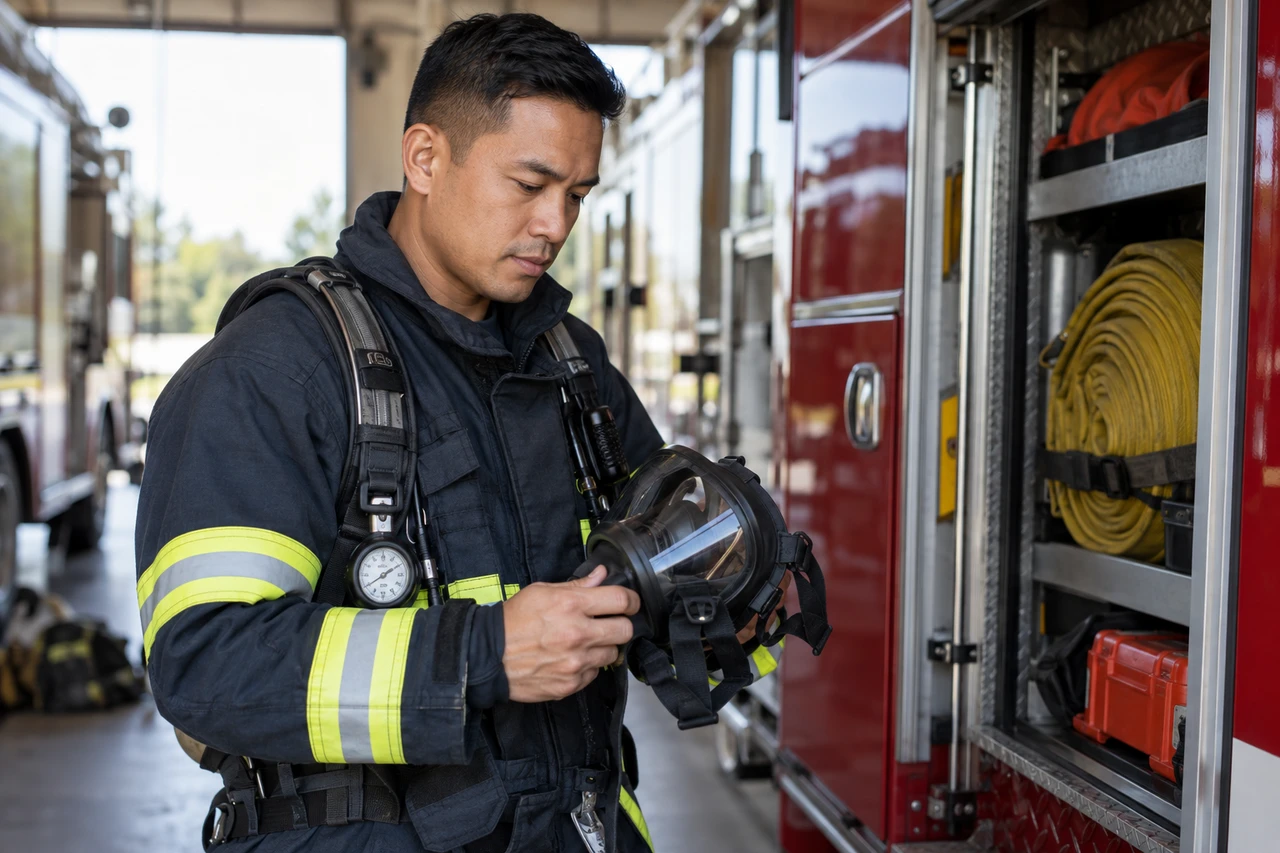
Responds to fires, accidents, medical emergencies, and hazardous material incidents to protect life and property. Conducts fire prevention inspections, community education, and technical rescue operations.
Pay
$38,000
Lower reported wage
$59,530
Median
$101,330
Upper reported wage
Annual U.S. salaries. Actual pay varies by location, employer, and experience. The lower and upper figures do not represent starting and senior salaries.
AI-generated image · Illustrative scene
Make this your goal
Build a personalized Roadmap Plan with CLEP savings and school matches.
Search CareerOneStop by occupation and state, then confirm the rules with the issuing agency. Coverage is incomplete; an empty result does not mean no license is required.
U.S. career guide. Program, employer, and state requirements can differ.
About this data
Direct match. Median $59,530. 355,300 jobs (excludes volunteer). BLS Quick Facts and the Employment Projections education matrix both give 33-2011 a typical entry level of "Postsecondary nondegree award"; the Occupational Outlook Handbook narrative says high school diploma but then names EMT certification as usually needed. Neither reading requires a two-year degree. Entry training is grouped with EMT and Paramedic certification rather than with the building-trades apprenticeships.
SOC 33-2011BLS EP 2025-35Verified 2026-04-28View on BLS
Illustration: AI-generated image · Illustrative scene