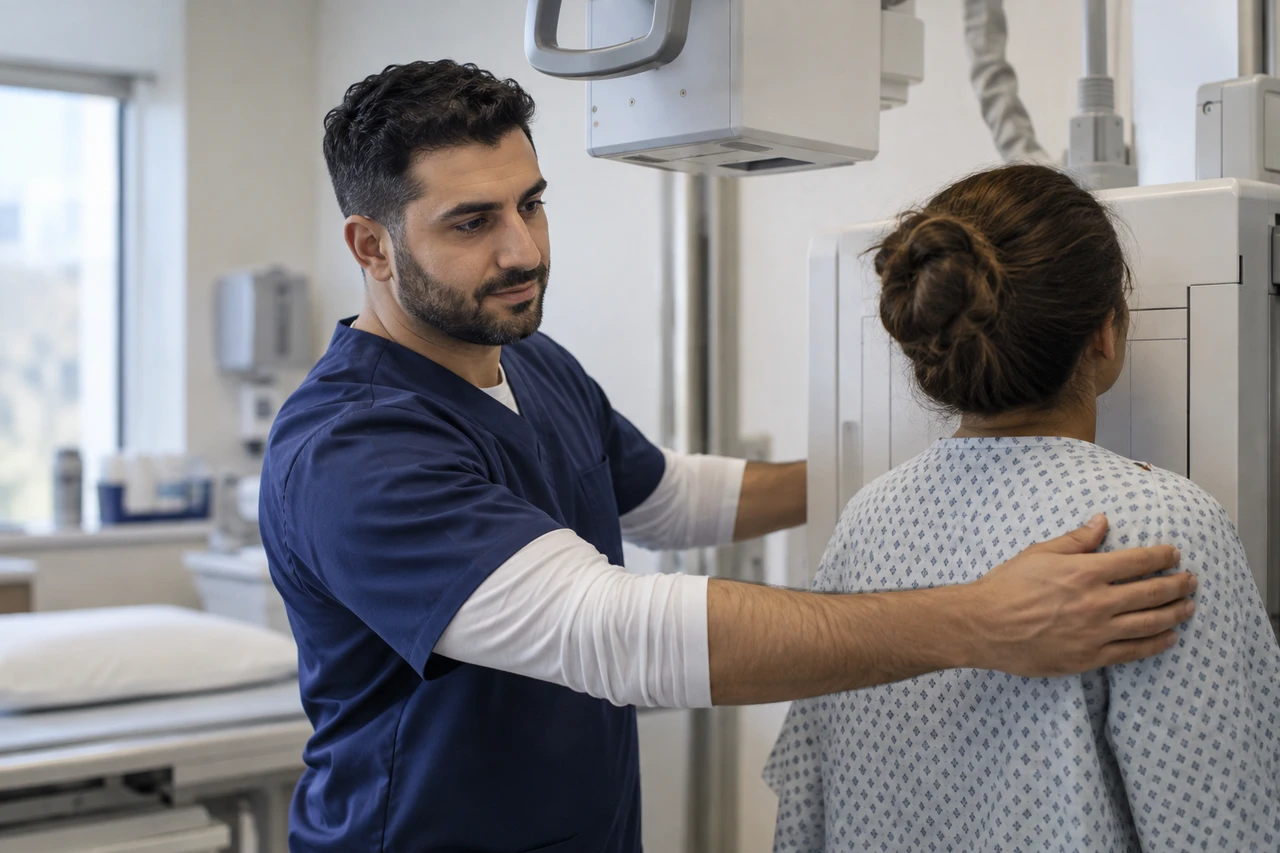
Perform diagnostic imaging examinations such as X-rays on patients. Operate CT scanners, and in some roles administer nonradioactive materials into the bloodstream for diagnostic or research purposes. Some technologists specialize in other scanning modalities.
Pay
$52,360
Lower reported wage
$77,660
Median
$106,990
Upper reported wage
Annual U.S. salaries. Actual pay varies by location, employer, and experience. The lower and upper figures do not represent starting and senior salaries.
AI-generated image · Illustrative scene
Make this your goal
Build a personalized Roadmap Plan with CLEP savings and school matches.
Most states require radiologic technologists to be licensed or certified; employers usually require or prefer professional certification. Confirm the exact state and modality rules.[1]
Search CareerOneStop by occupation and state, then confirm the rules with the issuing agency. Coverage is incomplete; an empty result does not mean no license is required.
A direct radiography preparation route; verify clinical placement and state exam eligibility before enrolling.[1]
Daily life
What you would do
Position patients and imaging equipment, follow imaging orders, capture diagnostic x-rays or CT images, and keep detailed records.[1]
Where you could work
More than half work in hospitals; others work in physicians’ offices, imaging laboratories, and outpatient centers.[1]
Hours and flexibility
Most work full time. Hospitals and other facilities open around the clock may require evenings, weekends, or overnight shifts.[1]
Physical and emotional demands
The job involves long periods standing and sometimes lifting or turning patients. Radiation badges and safety procedures help control exposure.[1]
How you could advance
With additional training, some technologists specialize in CT, mammography, or other imaging. MRI is a related but distinct role with its own experience and credential path.[1]
These are possible directions. Promotion timing and pay depend on the role and employer.
Questions to ask yourself and an employer
Would I enjoy precise technical work with patients who may be injured or anxious?
Can I manage standing, patient movement, and strict radiation-safety routines?