Compare trade-school and apprenticeship routes. Check each program’s training length, pay, tuition, fees, and local licensing requirements.
About this Career
Install, maintain, and repair electrical power, communications, lighting, and control systems.
Pay
$40,270
Lower reported wage
$62,350
Median
$106,030
Upper reported wage
Annual U.S. salaries. Actual pay varies by location, employer, and experience. The lower and upper figures do not represent starting and senior salaries.
A high school diploma or equivalent is typically needed. Some electricians attend technical school before entering an apprenticeship.
Most electricians learn through a 4–5-year apprenticeship that combines paid on-the-job training with technical instruction. Technical-school credit may count toward an apprenticeship.
Licensing requirements vary by state and locality. Check the requirements where you plan to work; completing a short training program alone does not establish eligibility to work independently.
Most states require licensing. Exams commonly cover electrical theory, the National Electrical Code, and local codes. Verify the apprentice, journey, and independent-contractor rules where you will work; renewal and continuing education vary.[1]
OSHA 10/30 Outreach courses provide safety training, not professional certification or a trade license. OSHA makes this program voluntary, although a state, locality, or employer may require it.[2]
Search CareerOneStop by occupation and state, then confirm the rules with the issuing agency. Coverage is incomplete; an empty result does not mean no license is required.
The usual 4–5-year apprenticeship combines paid on-the-job training with technical instruction. Technical-school credit may count, but a short course alone does not complete the apprenticeship.[1]
Costs to check before enrolling
Ask the sponsor for starting wages, wage increases, class schedules, tuition or dues, tools, protective equipment, transportation, and licensing fees in writing.
Planning questions: request a written estimate from each program or sponsor. A total cost has not been verified here.
Majors and routes to explore
A related major can be preparation; it does not by itself qualify you for the career.
Technical study can prepare for or count toward an apprenticeship. Check the sponsor’s credit policy and the licensing authority’s rules.[1]
Daily life
What you would do
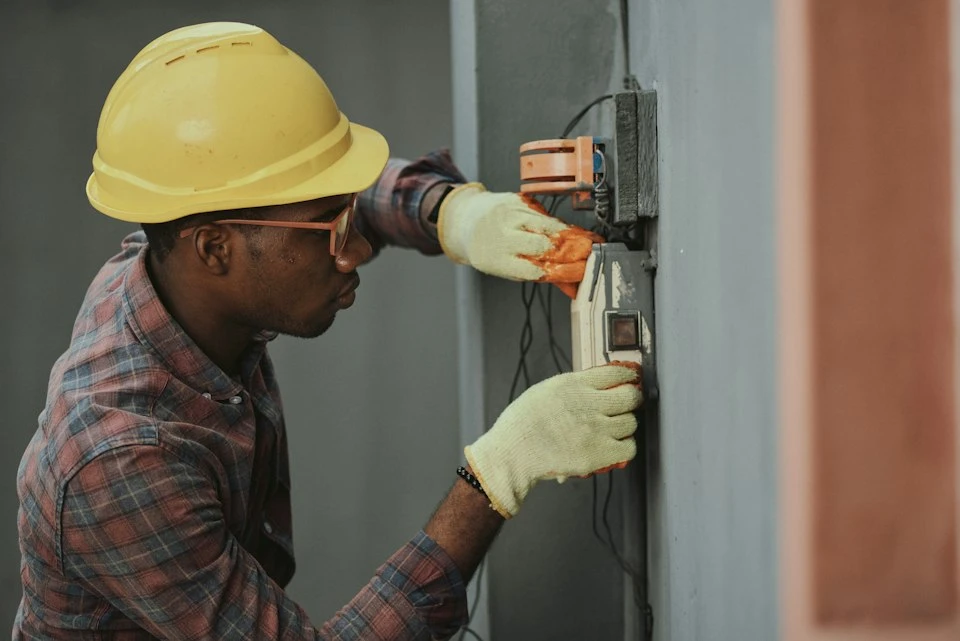
Read plans, install wiring and equipment, diagnose faults, test systems, and make repairs safely.[1]
Where you could work
Homes, businesses, factories, and construction sites, indoors and outdoors. Travel between worksites is common.[1]
Hours and flexibility
Most work full time; evenings, weekends, and overtime may be required. Weather and construction or maintenance schedules can affect hours.[1]
Physical and emotional demands
Work may involve heights, cramped spaces, kneeling, and carrying equipment. Electrical shocks, burns, and falls are hazards requiring safety precautions.[1]
How you could advance
After apprenticeship, journey workers may progress toward master-electrician, supervisory, or project-management work. Additional experience and local requirements apply.[1]
These are possible directions. Promotion timing and pay depend on the role and employer.
Questions to ask yourself and an employer
Would travel between sites, physical work, and changing schedules suit me?
Can I combine classroom learning with several years of supervised work?