GraduateSmart
GraduateSmart
Apply scientific principles to analyze evidence from crime scenes. Collect, identify, and classify physical evidence and run tests on materials such as fiber, hair, and tissue. May testify as an expert witness or specialize in ballistics or fingerprinting.
$47,630
Lower reported wage
$67,440
Median
$110,710
Upper reported wage
Annual U.S. salaries. Actual pay varies by location, employer, and experience. The lower and upper figures do not represent starting and senior salaries.

Build a personalized Roadmap Plan with CLEP savings and school matches.
Create free account →Specialty certifications exist but usually are not required for entry; police crime-scene roles may have academy rules. [1]
Search CareerOneStop by occupation and state, then confirm the rules with the issuing agency. Coverage is incomplete; an empty result does not mean no license is required.
About license data coverageExam is FREE with Modern States
Sign up free at modernstates.org, complete the course, and receive a voucher that covers the full $97 exam fee.
modernstates.orgCLEP Introductory Business Law
3 credits · Business & Law
$1,703
saved
CLEP American Government
3 credits · Political Science
$1,703
saved
CLEP Introduction to Sociology
3 credits · Sociology
$1,703
saved
CLEP History of the United States I
3 credits · History
$1,703
saved
U.S. career guide. Program, employer, and state requirements can differ.
BLS 'Forensic Science Technicians' (19-4092). Median $67,440. 13.3% growth — much faster than average.
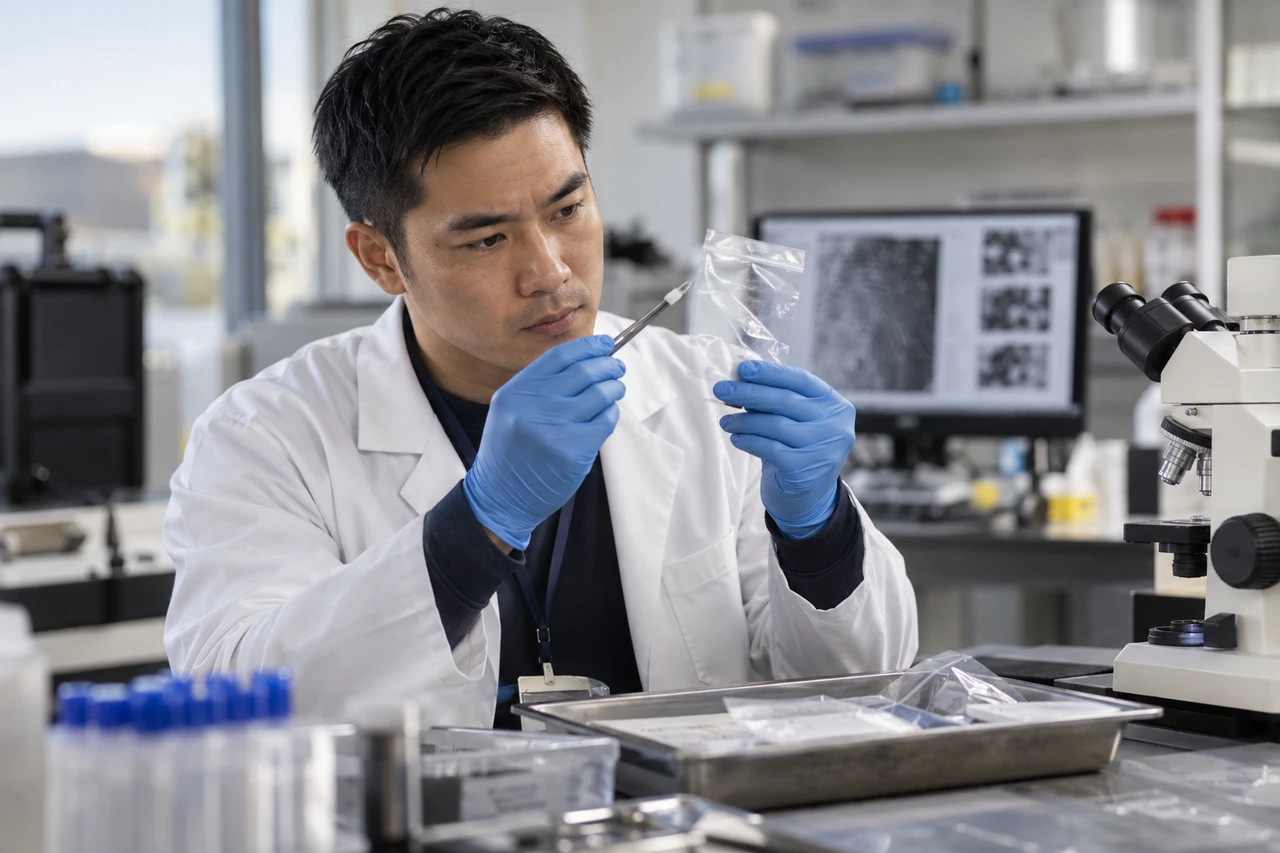
Illustration: AI-generated image · Illustrative scene
Ask whether any internship, field placement, or supervised training in your chosen route is paid; arrangements vary. [1]
Compare tuition after aid, required supplies and exams, travel, and any unpaid training time for the route you choose.
Planning questions: request a written estimate from each program or sponsor. A total cost has not been verified here.
A related major can be preparation; it does not by itself qualify you for the career.
Collect or analyze evidence for investigations, often specializing in crime scenes or laboratory work. [1]
Forensic science technicians work in crime laboratories, offices, and sometimes at scenes. [1]
Laboratory work can be regular; crime-scene assignments may require nights, weekends, or on-call time. [1]
Evidence integrity, detailed documentation, and exposure to disturbing cases require care and resilience. [1]
Experience and further specialty training may lead to more complex analysis or supervision. [1]
These are possible directions. Promotion timing and pay depend on the role and employer.